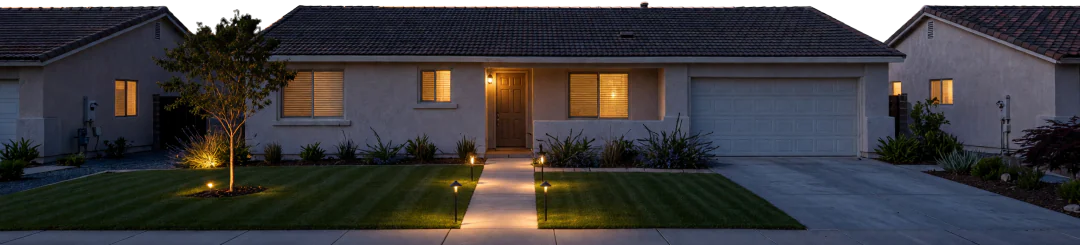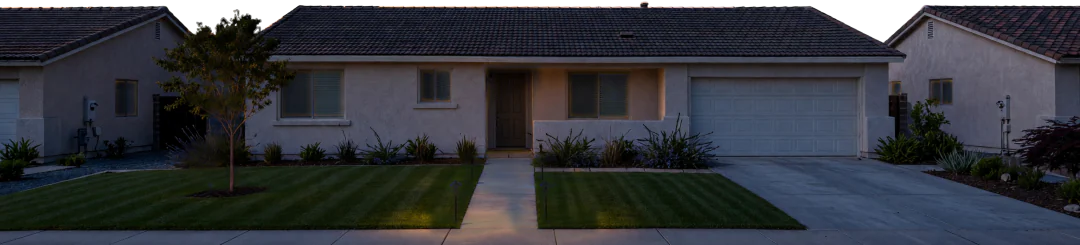
Why did my landscape lights stop working after the rain?
Eco Scapes·Updated

The short answer
When landscape lights stop working after rain, water has usually reached the circuit: a wet outdoor outlet tripping its GFCI, a buried splice that let moisture in, or a fixture that filled with water. In Hiddenbrooke, Vallejo, reset the GFCI once. If it trips again, stop resetting and have the wet connection found.
Landscape lights that quit after a storm almost always have a water problem, not a worn-out bulb. Lumetro Lighting's 2026 repair guide puts it plainly: if a system works in dry weather but fails after rain, "moisture is almost always involved." The water is either at the outdoor outlet the transformer plugs into, in a buried wire splice, or inside a fixture.
That's why the question comes up in November. In Hiddenbrooke and the rest of the inland North Bay, the rain mostly falls from November to March, and the first storms find every weak joint that sat dry all summer. The nights are getting long, so a dark front walk gets noticed fast.
What should I check first when all the lights are out?
Start at the power, not the fixtures. Kichler's troubleshooting guide says that when the whole system is out, check the 120 volt outlet first and whether the GFI or the breaker tripped, and not to go looking for blown lamps until you know the outlet has power.
Work through it in this order:
- The GFCI outlet. The transformer usually plugs into an outdoor outlet with a test and reset button. If that outlet doesn't have one, Lumetro suggests looking for the reset in the garage or on another exterior outlet.
- The panel breaker. If the GFCI won't reset, check the breaker for that circuit in the house panel.
- The transformer. Make sure it's still plugged in. If its own circuit breaker tripped, Kichler's next check is that the wires at the transformer's terminal block are snug and separate.
- The timer or photocell. Lumetro's guide says a mechanical timer can lose time after a power outage. A photocell covered in dirt or blocked by a growing shrub can also keep the lights off. Kichler suggests covering the photocell while you test, so the system thinks it's dark, and uncovering it after.
If the lights come back after one reset and stay on, watch them through the next storm. If your system runs on a dial timer, our post on landscape light timers and the fall time change shows how to tell which kind you have.

Why does my GFCI keep tripping when it rains?
A GFCI that trips again right after you reset it is telling you there is still water or a fault on the circuit. Lumetro's guide says a repeat trip "usually means moisture, a short, or a fault somewhere in the system," and warns against ever bypassing a GFCI, breaker or transformer protection device.
The usual places water gets in after a storm:
- The outdoor outlet itself. Check that the cover closes fully with the transformer plugged in.
- Sprinkler spray. Check that no sprinkler head reaches the outlet or the transformer. Vallejo's water rules already prohibit irrigation runoff onto sidewalks and structures, so a head that hits the house is worth fixing for both reasons.
- A fixture full of water. Lumetro notes that a water-filled well light or a crushed path light can short the whole system.
Leave it tripped until the wet spot is found. Lumetro also warns against resetting a tripping transformer again and again without finding the cause.
Why are only some of the lights out after rain?
When one run or a few fixtures go dark and the rest stay lit, the problem is usually a buried connection on that run. Lumetro's guide says to "inspect every underground splice in the affected area" and lists connectors in wet soil among the most common failure points.
Here is how the symptom usually points to the cause, based on the Kichler and Lumetro guides:
| What you see | Most likely cause | What it usually takes | | --- | --- | --- | | Every light out | Tripped GFCI, panel breaker, transformer breaker, or a timer that lost its time | Reset once, then find the wet spot if it trips again | | One run out, the rest lit | A wet buried splice or connector on that run | Inspect the underground splices on that run and redo a failed one with a direct-burial connector | | One fixture out | Lamp, socket, or water inside the fixture | Replace the lamp or the fixture, reseal the connection | | Lights dim toward the end of a run | Voltage drop or a loose connection | Tighten at the transformer, or replace the connector before the dim section | | Green or white crust on metal parts | Corrosion from water | Usually a new fixture or socket |
Can corroded landscape lights be fixed?
Sometimes. A corroded connector can be replaced on its own, which is the fix Kichler describes for a fixture with a bad connection. Lumetro's guide describes corrosion as green or white deposits on copper, brass, sockets, screws and connectors, and says a small amount on copper, brass or connectors can sometimes be cleaned. Deeper damage is a different story: corrosion inside a socket or a sealed LED fixture "usually means replacement is coming soon."
The fix also depends on how the system was put together. Lumetro warns against using indoor wire nuts underground, and says wires twisted together and wrapped in tape will fail once they're buried. Waterproof direct-burial connectors are the standard for low-voltage lighting. Kichler names silicone-filled wire nuts as one option for a cut fixture wire. If you dig up a splice and find tape, there are probably more like it on the same system.
That's the kind of work our landscape lighting maintenance and upgrades service covers: dead fixtures, transformer faults and LED upgrades for systems already in the ground. If one splice after another turns up taped, compare repairing them against rewiring those runs. Our low-voltage installation page explains how a new layout is wired from the transformer out.
Is it safe to work on landscape lights yourself?
Resetting a GFCI and checking a timer is ordinary homeowner work. Anything past that, turn the system off first. Lumetro's guide says to switch the system off before touching fixtures, wiring or connectors.
The cable running out to the fixtures is low voltage, but the 120 volt outlet and the house circuit behind it are not. Lumetro's advice is to stop and bring in an electrician if you find line-voltage wiring, damage to household circuits, or a breaker that keeps tripping.
How do you keep lights working through the rainy season?
Most of it comes down to keeping water away from the parts that carry power:
- Check that the outlet cover closes fully with the transformer cord plugged in.
- Watch one full sprinkler cycle and make sure no head sprays the transformer, the outlet or the fixtures. Vallejo's rules also say no outdoor watering within 48 hours after rainfall, so a controller set to skip after storms keeps the yard drier too. Check the City of Vallejo's drought status page for the current rules at your address. See watering rules by city for the neighboring towns.
- Trim back any shrub growing over the photocell, which Lumetro lists as a reason lights don't come on.
- Keep a simple sketch of where the cable runs go. Kichler points out that troubleshooting is much easier with a plan showing the fixtures and the wire runs back to the transformer.
If you're in Hiddenbrooke, the one thing to note before the next storm is which lights went out and in what order: everything at once, one run, or one fixture. That, plus whether the GFCI trips again after a reset, tells a technician where to start digging. Our Vallejo page covers what we do in Hiddenbrooke.
Before you call.
Water has usually reached the circuit, either at the outdoor outlet, in a buried wire splice, or inside a fixture. Lumetro Lighting's repair guide says a system that works dry but fails after rain almost always has a moisture problem.
No. Reset it once, and if it trips again, leave it off until the wet connection or short is found. Lumetro's guide warns never to bypass a GFCI, breaker or transformer protection device.
A single dark run usually means a failed buried splice or a cut cable on that run. Kichler and Lumetro both point to the connections on the affected section as the first place to look.
Yes. A sprinkler head that sprays the outdoor outlet, the transformer or the fixtures can cause the same GFCI trips as rain. Re-aim the head, and in Vallejo, remember the city's rules prohibit irrigation runoff onto structures.
Let’s look at your yard.
Tell us what your property needs. Call Eco Scapes to discuss your project.
Call for a quote(707) 329-8391