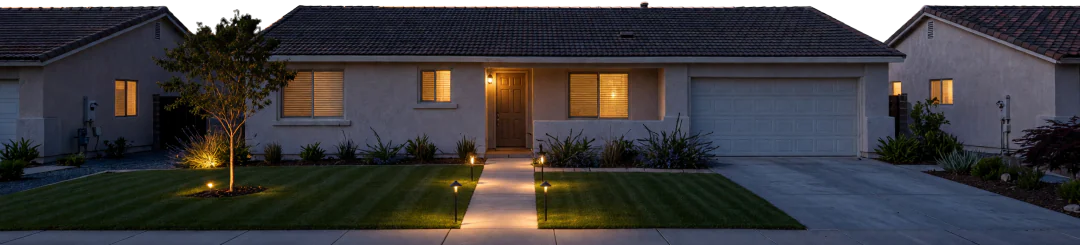
Should you leave fallen leaves on your lawn in Napa or American Canyon?
Eco Scapes·Updated

The short answer
A light scattering is fine, and mowing it into small pieces feeds the soil. A thick layer is not: University of Minnesota turf staff suggest keeping leaf cover to 10 to 20 percent of the lawn. In Napa and American Canyon, put the extra in the compost or yard waste cart, never the street.
<!-- Fact sources (opened 2026-11-25):
- University of Minnesota Turfgrass Science, "Do you really need to rake all your leaves? An update" (2013, updated 2017-10-19,
Sam Bauer): "10-20% coverage of your lawn might be okay"; heavy leaf litter over winter can smother grass and slow spring growth; three options (rake or blow and compost, bag with the mower, mulch with the mower); mulching preferred because "the nutrients and organic matter will benefit the lawn and soil"; "Chopping leaves into small pieces is important"; mulching may take several passes; heavy buildup is too much to mulch and must be removed. Snow mold and vole notes are cold-climate and not used.
- UNL Water, "Managing Leaves in Your Lawn" (Nicole Stoner, 2019-11-25): left over winter leaves "can smother the grass"; mow
"at a higher deck height two or three times"; mulch mowing "returns complex organic matter and nutrients to the soil"; will "not contribute to thatch".
- UC IPM cool-season mowing: tall fescue mowed at 1 1/2 to 3 inches; only remove one-third of the height at a time; higher end
of the range gives turf more tolerant of shade among other stresses; more frequent mowing may be needed as growth picks up in fall.
- UC IPM "Mulches vary in their benefits and drawbacks", grass clippings and leaves row: readily available, must be reapplied
often, may contain weed propagules; "Mats and reduces water penetration, especially if not dried before application. Better if composted before use."
- Napa Recycling, "Compost your leaves, pumpkins & food scraps" (2026-10-28): up to two (NRWS) or four (NCRWS) compost carts at no
charge, extra carts for a small fee; residential customers can pick up one box of compostable bags at the Napa office for extra leaves; call ahead for an extra pickup of full compost bags on the regular day, up to two times per year; "it is illegal to blow your leaves into the street"; "Leaves left in the street end up in storm drains and cause flooding."
- Napa Recycling curbside page: leaves, grass clippings, brush and garden prunings go in the brown or green compost cart; branches
6 inches in diameter or smaller; no glass, plastic, rocks, dirt, pet waste or painted wood.
- City of American Canyon stormwater page: "The number one cause of street flooding? Leaves!"; leaves in gutters and storm drain
inlets are the most frequent cause of flooding in the city and a violation of Municipal Code 14.28; "Don't blow, rake or pile your own leaves in the gutter"; street sweepers can't pick up big piles of leaves; Recology provides yard waste bins; storm drains flow directly into local creeks; hosing leaves and clippings into the gutter is a "Do Not".
- Client: rain mostly November to March (CLIENT.md region note); yard cleanup includes green-waste haul-away
(content/pages/yard-property-cleanup-services.tsx); American Canyon city-wide and selected Napa neighborhoods (content/areas.ts).
- Not used: UC Master Gardener leaf articles on ucanr.edu (Napa, Marin, Contra Costa) refused automated reads (403).
--> Leave a light scattering of leaves on the lawn, or better, run the mower over it. A thick layer is a different story. The University of Minnesota's turfgrass team says leaf cover of "10-20% of your lawn might be okay," and warns that heavier litter left through winter can smother the grass and slow its growth when spring comes.
That question lands in late November for most yards in Napa and American Canyon. The street trees and backyard trees are dropping, the first storms have arrived (the rain here falls mostly from November to March), and wet leaves stick to everything. Here is how to tell a harmless layer from one that will cost you grass, and what to do with the leaves you take off.
How many leaves is too many on a lawn?
If you can't see the grass blades through the leaves, there are too many. The University of Minnesota guide puts the limit at 10 to 20 percent cover, so most of the lawn should still show green. Past that point, heavy litter left in place can smother the grass, and the same guide says it slows growth in spring if it isn't removed soon.
A quick way to judge it: walk the lawn and look down. Scattered leaves with green between them can stay. A solid brown mat, or drifts against the fence and along the beds, needs to come off.
Wet weather makes it worse. A dry layer lets some light and air through. Once the rain flattens it, the same leaves form a sheet that sits on the grass for days. The University of Nebraska's lawn article says plainly that leaves left on the turf over winter "can smother the grass."
Some of the extension advice online is written for snow country, with warnings about snow mold under the leaves. That part doesn't apply to an inland North Bay lawn. The shading and smothering does.
Can you just mow over the leaves instead of raking?
Yes, if the layer is light to moderate. Both university sources prefer it. The Minnesota guide calls mulch mowing "my preferred option because the nutrients and organic matter will benefit the lawn and soil," and the Nebraska article adds that mowed-in leaves "will also not contribute to thatch."
How to do it so it works:
- Mow when the leaves are dry. Wet leaves clump under the deck and drop back onto the grass in mats.
- Keep the mower high. Nebraska suggests a higher deck height and two or three passes. For a tall fescue lawn, UC's mowing guide gives a range of 1 1/2 to 3 inches and says to take off no more than a third of the height at once. The higher end also gives you turf that copes better with shade.
- Chop them small. Minnesota's advice is direct: "Chopping leaves into small pieces is important." You want pieces that fall between the blades, not flakes sitting on top.
- Check after a day. If you still see a leaf layer instead of green, it was too much to mulch.
UC's mowing guide also notes that growth picks up again in fall, so a lawn that's still growing may need more frequent mowing now anyway. Those mowings can double as your leaf passes.
When do you have to rake or blow the leaves off?
When the layer is too thick to disappear after a couple of mower passes. The Minnesota guide says heavy buildup is too much to mulch and has to be removed. The usual spots are under large trees, along fences where the wind piles leaves, and in corners that stay shady and damp.
The three choices the Minnesota guide lists, side by side:
| Approach | When it fits | What to watch | | --- | --- | --- | | Mulch mow and leave on the lawn | Light to moderate cover, dry leaves | Several passes may be needed; nothing should be left as a layer | | Bag with the mower | Moderate cover you'd rather not leave | Bagged leaves still need a cart or compost pile | | Rake or blow, then remove | Heavy drifts, wet mats, leaves under big trees | The leaves have to go somewhere other than the street |
If a whole yard has gone a season without attention, the leaves are usually part of a bigger job: beds full of debris, shrubs overgrown into the lawn, trimmings to haul. Our yard and property cleanup service clears that kind of backlog and hauls the green waste away, so the lawn starts the wet months clean.
Can you use fallen leaves as mulch in garden beds?
You can, with care. UC's integrated pest management program rates leaves and grass clippings as a mulch that's easy to find but has to be reapplied often, may carry weed seeds, and "mats and reduces water penetration, especially if not dried before application." Its advice is that leaves are "better if composted before use."
So in practice: shred them first (the bagging mower does this), let them dry, or compost them before they go on a bed. A layer of whole wet leaves on a planting bed can shed water away from the roots in the same way it shades out grass. If you're after beds that look finished through winter, our mulch installation page covers bed preparation and the materials we use.
Is it illegal to blow leaves into the street in Napa?
Yes. Napa Recycling's October 28, 2026 leaf notice says, "it is illegal to blow your leaves into the street," because "leaves left in the street end up in storm drains and cause flooding."
American Canyon is just as clear. The city's stormwater page calls leaves "the number one cause of street flooding" in town, says leaves in gutters and storm drain inlets violate the city's stormwater code, and tells residents: "Don't blow, rake or pile your own leaves in the gutter." It also notes that street sweepers can't pick up big piles of leaves, and that storm drains flow directly into local creeks.
If someone else does your yard work, ask that the leaves be bagged or carted rather than blown to the curb.
Where do the extra leaves go in Napa and American Canyon?
In the City of Napa, leaves go in the brown or green compost cart. Napa Recycling's curbside page lists leaves, grass clippings, brush and garden prunings as accepted, with branches no thicker than 6 inches, and no rocks, dirt or plastic.
When the cart is full, Napa Recycling's leaf notice gives these options:
- Residential customers can pick up one box of compostable bags at the Napa office for extra leaves.
- Full compost bags can go out for an extra pickup on your regular collection day, up to two times a year, if you call ahead.
- Customers get up to two (NRWS) or four (NCRWS) compost carts at no charge, and extra carts for a small fee.
In American Canyon, the city's stormwater page says Recology provides yard waste bins so you can dispose of leaves as you rake, and the leaves are composted. Check your hauler's page for your pickup day and limits.
What should you do with the lawn after the leaves are off?
Mostly, leave it alone and let the wet season do its work. A few things are worth a look once the leaves are gone:
- Yellow or thin patches where a leaf drift sat. Check that the sprinklers reach that spot evenly before you plan any reseeding.
- Feeding. By late November, most of the fall feeding window has closed for tall fescue. Our post on whether it's too late to fertilize in November walks through UC's calendar.
- Sprinkler heads that were buried under leaves. Clear them so they pop up and spray freely the next time the system runs.
If keeping up with this every fall is the part you'd rather hand off, our lawn care and maintenance page explains the weekly or every-two-weeks mowing and edging schedule, and how seasonal jobs are agreed in the plan. Coverage details are on the Napa page for our selected Napa neighborhoods and the American Canyon page for the whole city.
The next dry afternoon, walk the lawn and look for the spots where you can't see green. Those are the ones to clear before the next storm.
Before you call.
A thick layer is. University of Minnesota turf staff suggest keeping leaf cover to about 10 to 20 percent of the lawn, because heavier litter left through winter can smother grass and slow its spring growth.
Yes, when the layer is light to moderate and the leaves are dry and chopped small. University of Nebraska and University of Minnesota extension guides say mulch-mowed leaves return organic matter and nutrients to the soil without adding to thatch.
Yes. Napa Recycling's curbside page lists leaves, grass clippings, brush and garden prunings for the brown or green compost cart, and its leaf notice offers compostable bags and up to two extra pickups a year by calling ahead.
No. The City of American Canyon's stormwater page says leaves in gutters and storm drain inlets violate its stormwater code and are the most frequent cause of street flooding in town.
Shred, dry or compost them first. UC's integrated pest management program says leaf mulch mats and keeps water out when applied wet, and works better composted.
Let’s look at your yard.
Tell us what your property needs. Call Eco Scapes to discuss your project.
Call for a quote(707) 329-8391