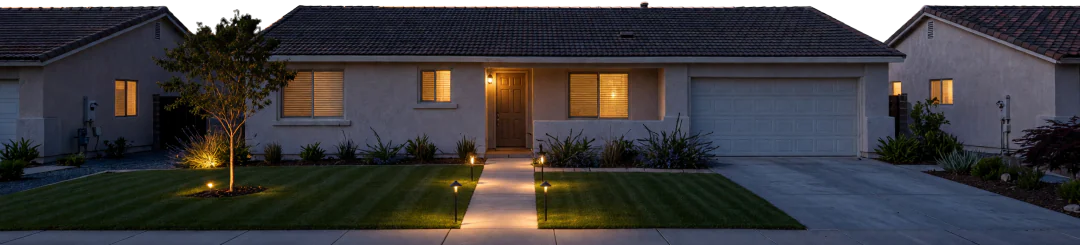
Is it too late to fertilize your lawn in November near Fairfield?
Eco Scapes·Updated

The short answer
For most tall fescue lawns in the Fairfield area, mid-November is past the main feeding window. UC's cool-season lawn calendar lists March, May, September and October, and puts the last feeding 6 to 8 weeks before the likely first frost. If you fed this fall, stop for winter. If you missed it, plan for March.
Mid-November is late for a lawn feeding in the Fairfield area, and for most yards the better move is to wait until March. The answer depends on two things you can check in a minute: what kind of grass you have, and whether it already got a feeding in September or October.
When should you fertilize a lawn in Northern California?
UC's Statewide Integrated Pest Management Program lists March, May, September and October as the feeding months for cool-season lawns, and it says to limit feeding in the hot summer months. Its general rule adds a limit at the other end: the last application should go down 6 to 8 weeks before the likely date of the first frost.
UC calls tall fescue the most common lawn grass in California, so if your lawn in Green Valley, Rancho Solano or Cordelia stays green through winter, it is likely a cool-season lawn. Bermudagrass is a warm-season grass and works on a different clock.
| Grass | UC's feeding months | What November means | | --- | --- | --- | | Tall fescue and other cool-season lawns | March, May, September, October | Main fall window has closed. Feed again in March. | | Bermudagrass and other warm-season lawns | May, June, September, October | Growth is slowing toward winter. Wait for late spring. |
Is it too late to fertilize my lawn in November?
For a cool-season lawn that was fed in September or October, yes. It has had its fall feedings on UC's calendar, and another one now would land outside the window UC recommends.
If the lawn missed fall feeding entirely, the picture is a little less firm. UC's tall fescue page counts September through December as the grass's active growing period, and tall fescue stays green through cool, mild winters. So a light feeding on a lawn that is still green and still being mowed every week or two is not wasted. The frost rule decides it. Count back 6 to 8 weeks from when your yard usually sees its first frost. If that point has already passed, put the bag away and plan for March.
For bermudagrass, November is past the useful window. UC's warm-season calendar ends with October, and its mowing guide notes that warm-season grass slows down or goes dormant in fall and winter. A bermuda lawn that turns tan in winter is doing what it normally does. UC does note that warm-season grasses keep their color better into cool weather when they are fed in fall, which is what the September and October feedings on its calendar are for.
What happens if you skip fall fertilizer?
The lawn isn't left with nothing. UC notes that leaving clippings on the lawn after mowing (grasscycling) supplies about 20% of what most grasses need, so a lawn that is mowed regularly with a mulching mower is still getting something back. The next scheduled feeding on UC's calendar is March.
Thin areas are a separate problem. Tall fescue grows in clumps rather than spreading sideways, and UC says open areas in a fescue lawn may need to be reseeded. Fertilizer won't close those gaps on its own. If your lawn has bare or thin areas right now, it's better to plan aeration and overseeding for the right season than to spread more fertilizer this month. Our guide to when to aerate and overseed in the North Bay covers the timing.
How to fertilize a lawn this late without wasting it
If your lawn is green, growing and has had no fall feeding, and your frost count still leaves room, keep it light and careful. UC gives three practical rules:
- Keep each feeding light. UC's rate table caps a single application at 1 pound of nitrogen per 1,000 square feet. The bag tells you how much product that is. Late in the year, staying under the cap is the sensible choice.
- Water first, then spread on dry blades. UC says to irrigate deeply a few days before feeding so the soil is moist, and to have the grass blades dry when you spread.
- Keep it off the pavement. UC says not to let extra fertilizer wash into storm drains, and to fill the spreader over a driveway or other hard surface where spills can be swept up. Spilling product onto the lawn while you pour it can burn the grass.
That last point matters more in November than in May. When storms are rolling through, granules left on a driveway or sidewalk end up in the gutter. Sweep them back onto the grass before the next rain.
What should you do for your lawn in November instead?
A November lawn mostly needs good mowing, a sensible watering schedule and the leaves kept off it.
Mow at the right height. UC lists 1½ to 3 inches for tall fescue and suggests the higher end of that range for a lawn that copes better with drought, heat, traffic, shade and pests. Remove no more than a third of the blade in one cut. UC also notes that fescue picks up growth again in fall, so a lawn may still need regular mowing this month.
Leave the clippings. That 20% from grasscycling is free feeding, and it happens on every mow.
Adjust the watering for the season. A lawn needs less sprinkler time once the rains start. Our post on winterizing a sprinkler system in Fairfield covers the controller and backflow side.
Look at the patchy areas closely. A patchy area can come from uneven sprinkler coverage, so check the sprinklers before reaching for fertilizer. Read why a patchy lawn should start with a sprinkler check.

Keep leaves and debris off the grass. A heavy fall cleanup is easier to handle in one visit than over several weekends. Our yard and property cleanup page explains what that job includes.
Who should time your lawn feedings?
Feeding is easy to miss when it isn't on anyone's calendar, which is how a September job turns into a November question. Our premium lawn care and maintenance plans put a lawn on a regular schedule of weekly or every-other-week visits for mowing, edging and tidy beds. The lawn care page shows how the year's work fits together.
If thin spots are the bigger worry, the next read is our guide to when to aerate and overseed in the North Bay. The Fairfield service page lists the neighborhoods we currently book.
Before you call.
For most tall fescue lawns that were fed in September or October, yes. UC's cool-season calendar ends fall feeding with October, so the next feeding is in March.
The last feeding should go down 6 to 8 weeks before the likely first frost, according to UC. Because UC's cool-season calendar ends with October, it follows that for cool-season lawns in Northern California the September or October feeding is the one that goes down before winter.
No. UC's warm-season calendar ends feeding with October, and bermudagrass slows down or goes dormant in fall and winter. A tan bermuda lawn in winter is normal.
Partly. UC says leaving clippings on the lawn supplies about 20% of the fertilizer most grasses need, so mowing with a mulching mower helps all year.
UC doesn't give a rule about rain. What it does say is to water the lawn deeply a few days before feeding and to spread the fertilizer on dry grass blades. It also says not to let extra fertilizer wash into storm drains, so keep granules off driveways and sidewalks and sweep any spills back onto the lawn before rain arrives.
Let’s look at your yard.
Tell us what your property needs. Call Eco Scapes to discuss your project.
Call for a quote(707) 329-8391