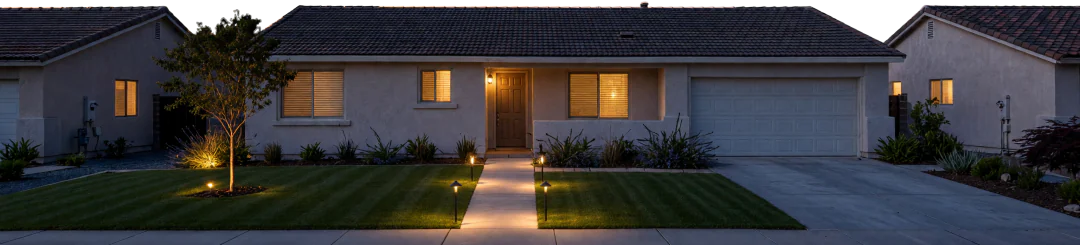
Is fall a good time to replace your lawn in Vallejo?
Eco Scapes·Updated

The short answer
Yes. UC Davis experts call fall the best time to plant in most of California, because the soil stays moist and temperatures mild for months, so roots grow before summer heat. In Vallejo, apply for the Solano County Water Agency's lawn rebate before any grass comes out: at least half the lawn must still be green when you apply.
Fall is a good time to replace a lawn in Vallejo. A UC Davis article on replacing lawns with water-wise plants in fall calls fall the best time in most of California for landscape planting, because the soil holds more moisture and temperatures stay mild for several months. That gives roots time to grow before summer heat and dry weather, which the article says is stressful for new plants.
That lines up well with a Vallejo yard. The heat here peaks in September, not July, so October is when a new bed stops fighting the sun. Plants that go in between now and winter get months of rain on their roots before next summer asks anything of them.
The catch is the order of things. If you want the lawn rebate, the paperwork comes before the shovel, and your lawn has to still be mostly green when you apply.
Can I get paid to replace my lawn in Vallejo?
Yes, if the program has funds when you apply. Vallejo's conservation rebate page says the city offers its rebates in partnership with the Solano County Water Agency (SCWA), and lists turf removal at up to $1,500 for residential customers. The same page still carries a note that new applications "may be curtailed at any time," so call before you plan around the money.
SCWA's Water-Efficient Landscape Rebate page sets the terms: $1.50 a square foot of lawn converted, up to $1,500 for a home, which covers 1,000 square feet. You need to convert at least 300 square feet, and the water account has to have been open for at least 12 months. Rebates are first come, first served while funds last. SCWA's page doesn't list program dates, so confirm it's open when you apply. Our rebate finder sets Vallejo's offer beside the other towns we serve.
Does my lawn have to be green to get the rebate?
Mostly, yes. SCWA's page asks for a maintained lawn with "existing green grass in at least 50% of lawn area." Brown lawns, bare dirt and weed-only patches aren't eligible, though SCWA says it reviews applications case by case.
This is where fall timing gets tricky. A lawn that went patchy through a September heat wave may be under that line in mid-October. Don't pull the dead grass, spray it out or let it go to dirt "to get a head start." That can disqualify the whole project. If more than half of it looks brown, ask SCWA before you apply rather than guessing.
How long do I have to finish after approval?
120 days from the Notice to Proceed. Nothing can start before that notice arrives, because SCWA's program isn't retroactive. After the work is done, there's a post-inspection, and if something is out of line you get 30 days to fix it.
Here's what that window looks like for a fall start:
| Notice to Proceed arrives | Work must be finished by | | --- | --- | | November 1, 2026 | March 1, 2027 | | November 15, 2026 | March 15, 2027 | | December 1, 2026 | March 31, 2027 |
Every row puts the planting in the rainy months. That's the real advantage of applying in fall: the deadline and the best planting season fall in the same stretch. Apply in spring and the same 120 days run into summer, the heat and dry weather the UC Davis article warns are hard on new plants.
What has to go in where the lawn was?
SCWA's rebate page asks for drought-tolerant or native plants that cover about half the area once they're grown. The ground between them gets at least 3 inches of mulch, such as bark or rock. New lawn and artificial turf don't qualify.
The SCWA rebate page has the full list, so read it before you choose plants. The UC Davis article also says to cover the soil with organic mulch, and bark at SCWA's 3 inches does that.

Can I keep my sprinklers in the new beds?
No. SCWA requires low-volume drip, micro-spray, bubblers or hand watering, and says no overhead spray, with no runoff, overspray or misting. Replacing the irrigation alone doesn't qualify, either. It has to be part of the converted area.
That usually means the old spray zone gets converted to drip: the bed gets its own valve, a filter and a pressure regulator, then an emitter at each plant. On Vallejo's hills it matters more than most places. The clay loam on many slopes takes water in slowly, and the city fines irrigation runoff onto sidewalks, parking lots or buildings, according to its water restrictions page. Drip puts water at the roots at a rate the soil can take, so it doesn't sheet down the driveway.
If you're weighing whether to keep part of the lawn, our guide to drip versus sprinklers covers which areas suit which.

How do I water new plants through a Vallejo winter?
Less than you'd think, and not after rain. The UC Davis article's advice is to water new plants deeply and frequently through their first summer, then water less often the second summer. Over a fall planting's first winter, the rain does much of that work.
Vallejo's rules say no outdoor watering within 48 hours after rainfall. Set the new drip zone to skip after rain, either with a rain sensor or a weather-based smart controller, and push a finger into the soil beside a few plants before a dry week. If it's still damp an inch or two down, let the run skip.

Is it better to wait until spring?
Only if your lawn won't pass the 50% green line now. Many people think spring is the best time to plant, the UC Davis article notes, but its experts favor fall, before winter sets in and the soil gets too wet to work. A spring Notice to Proceed sends the end of the 120 days toward summer, and the first watering season starts before the roots are deep.
If the lawn is mostly green today, fall is the stronger choice for a Vallejo yard.
What to do next
Measure the lawn you'd remove, length times width for each piece, and note whether it adds up to 300 square feet or more. Take a few dated photos of it as it looks now. Then apply with SCWA and wait for the Notice to Proceed before anything comes out.
While you wait, walk the sprinkler zone that waters that lawn. Note where its valve is and whether the same valve also feeds beds you're keeping, because that decides how the drip conversion gets plumbed. One homeowner, Luke, wrote in a Google review that we "Replaced my sprinkler valves, drip line timer, and drip line wiring." That's the kind of zone-by-zone work a conversion needs. The Vallejo lawn, sprinkler and lighting page shows the rest of what we do in town.
Before you call.
Fall. A UC Davis article calls fall the best time in most of California for landscape planting, because moist soil and mild temperatures let roots grow before summer heat and dry weather stress new plants.
Usually not. The Solano County Water Agency's Water-Efficient Landscape Rebate asks for green grass on at least 50% of the lawn area, and brown lawns, bare dirt and weed-only areas aren't eligible, though applications are reviewed case by case.
120 days from the Notice to Proceed. Nothing can be removed before that notice, and a failed post-inspection gives you 30 days to fix the problem.
No. SCWA requires low-volume drip, micro-spray, bubblers or hand watering in the converted area, with no overhead spray, runoff, overspray or misting.
No. The City of Vallejo bans outdoor watering within 48 hours after rainfall, so set the new drip zone to skip after rain.
Let’s look at your yard.
Carlos walks the property first, then quotes it free.
Call for a free quote(707) 329-8391